
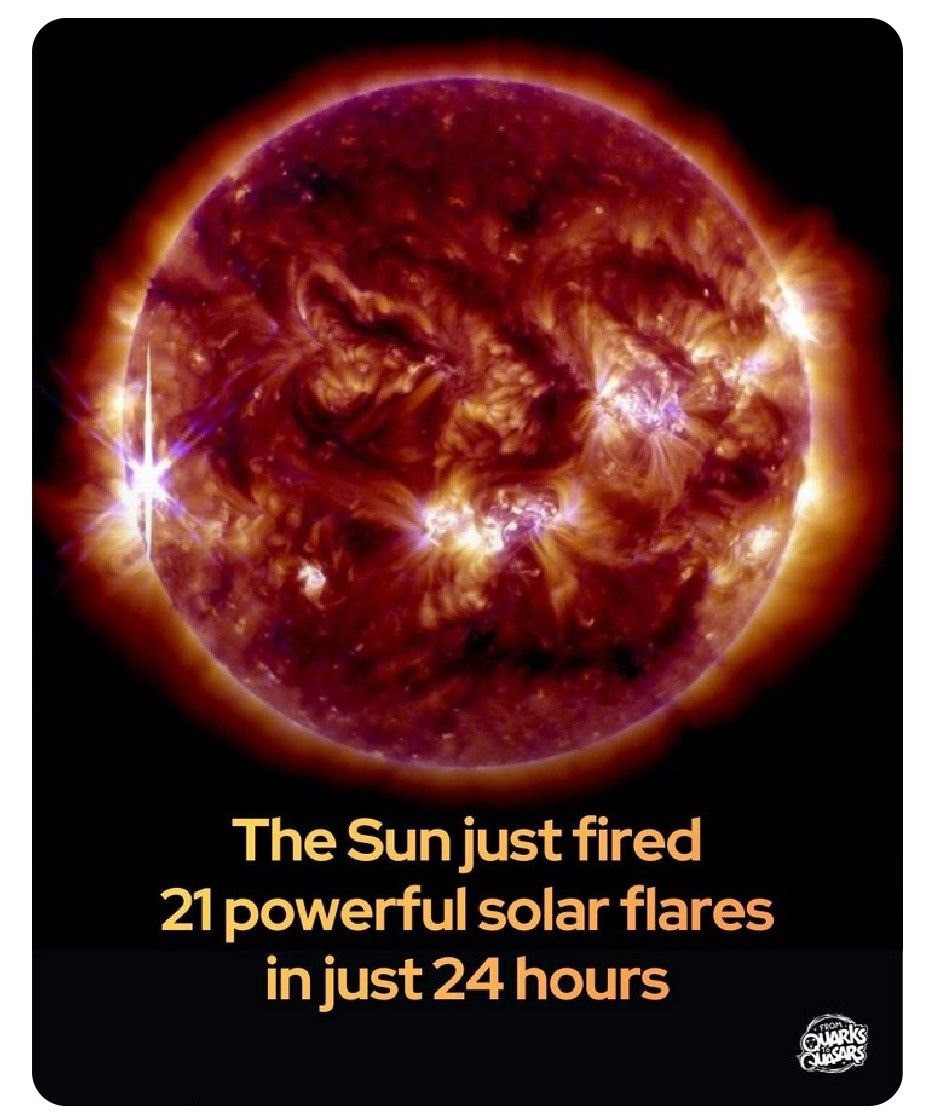
The Sun just unleashed its strongest flare of 2026 — in a barrage of eruptions.
Over a 24-hour period beginning late February 1, a rapidly growing sunspot — designated AR4366 — produced 18 M-class solar flares and 3 X-class flares. One of them, an X8.3 flare, was the most powerful solar eruption of 2026 so far.
Solar flares are ranked by intensity: A, B, C, M, and X, with each level representing a tenfold increase in energy output. X-class flares are the most energetic explosions the Sun can produce. The number following the X indicates its specific strength. An X8.3 flare is rare — among the highest observed in this solar cycle.
This flare wasn’t just big on paper. It released a sudden burst of X-ray and ultraviolet radiation that ionized Earth’s upper atmosphere, disrupting high-frequency radio communications. Strong R3-level blackouts were reported over eastern Australia and New Zealand, where signals in the shortwave band briefly failed.
Scientists are now watching closely for signs of a coronal mass ejection, or CME — a cloud of solar plasma that can follow a flare and trigger geomagnetic storms. Early models suggest the material from this flare will mostly miss Earth, though a glancing blow is possible around February 5. If that happens, it could elevate geomagnetic activity and spark auroras at higher latitudes.
The source of the flare, sunspot AR4366, is still rotating into a more Earth-facing position. It remains magnetically complex, meaning more eruptions could occur in the coming days. Forecasters with NOAA describe it as highly active, and warn that additional flares — and possible CMEs — are likely.
Solar flares remind us that even 93 million miles away, the Sun’s activity can ripple through Earth’s skies, technologies, and systems in real time.
📸Credit: SDO
~ Paul White Gold Eagle
 Sunny's Journal