
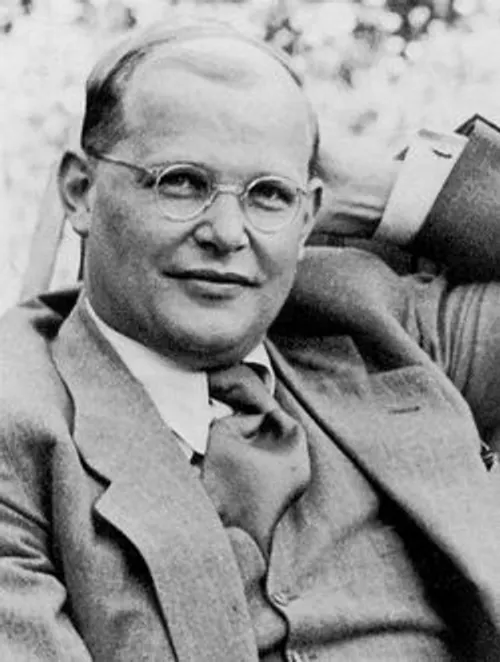
We discussed Dietrich Bonhoeffer and his spot on definition of stupidity here a few weeks ago. The thread and book are up there 👀👆👆 Here is point 87 below.👀👇👇
Links available in Tironianae Telegram Channel.
The GREAT UN-Brainwashing
- The Theory of Stupidity, or more precisely, the analysis of moral and intellectual failure under corrupt power hypothesised by Dietrich Bonhoeffer, remains one of the most unsettling and relevant reflections on human behaviour in times of institutional decay. Writing under the cloud of Nazi Germany, Bonhoeffer was not merely critiquing ignorance; he was diagnosing a social and psychological condition that allows destructive systems to flourish while ordinary people comply, defend or ignore what should be obvious wrongdoing. For those alert to corruption in government and institutions, the warning by Bonhoeffer cuts sharply, as the greatest danger is not always evil leadership but unthinking followership.
Bonhoeffer argued that stupidity is more dangerous than malice. An evil person can be confronted, exposed and resisted because evil often carries intention and awareness. But the ‘stupid’ person, as related by Bonhoeffer, is not defined by low intelligence. Rather, this is someone who has surrendered independent judgement. They become absorbed into a group, ideology or authority structure and repeat its talking points as if they were personal conclusions. Evidence does not move them. Contradictions do not slow them. Facts bounce off because their thinking has been socially captured.
He observed that this condition increases under strong movements of mass power. When institutions, propaganda systems or dominant narratives become overwhelming, individuals psychologically offload responsibility. Belonging replaces reasoning. Slogans replace individual thought. Loyalty replaces conscience. The person feels morally justified not because they have examined truth, but because they are aligned with the ‘approved’ side. In that state, Bonhoeffer warned, people can become instruments of wrongdoing without recognising themselves as such.
This analysis is uncomfortable because it does not allow easy moral superiority. Bonhoeffer did not divide the world neatly into villains and heroes. He suggested that under sufficient pressure of fear, social reward, authority endorsement or crisis, many ordinary people drift into uncritical compliance. Corrupt systems rarely sustain themselves through force alone; they rely on psychological participation. Bureaucracies, media environments and institutional cultures can normalise questionable actions by distributing responsibility so widely that no one feels personally accountable.
A key insight in Bonhoeffer’s theory is that stupidity is not primarily cured through instruction. Increased information alone does not free someone whose identity is attached to a narrative. Instead, liberation often requires an inner act of moral courage, such as a willingness to stand apart from the group and risk social cost. Independence of mind is not merely intellectual; it is ethical and spiritual. It demands a commitment to truth that outranks comfort and belonging.
The foundation by Bonhoeffer is both validating and challenging. It validates the speculation that systemic wrongdoing persists not only through secret plots but also through public compliance. Yet it also challenges the critic, as awareness itself is not a safeguard. Skepticism can develop into its own ecosystem. Alternative narratives can become echo chambers. The same psychological surrender Bonhoeffer warned about can happen in any camp that stops questioning itself.
So the hard questions turn inward. Where have you accepted claims mainly because your side said them? When did you last change your mind because evidence demanded it? Do you measure truth by facts or by who is speaking? Are you resisting corruption with disciplined thought or just switching allegiances of trust? If social pressure intensified tomorrow, which of your convictions would hold and which would quietly bend? This warning by Bonhoeffer is not only about how societies fall, but also about how individuals decide whether they fall with them.
Just had to share this again, because these are the greater truths we are dealing with today. We call it cognitive dissonance, but Bonhoeffer takes it steps further. I know our admins posted it here previously, but you really need to watch it, perhaps again…. Wow.👀👇👇
 Sunny's Journal