
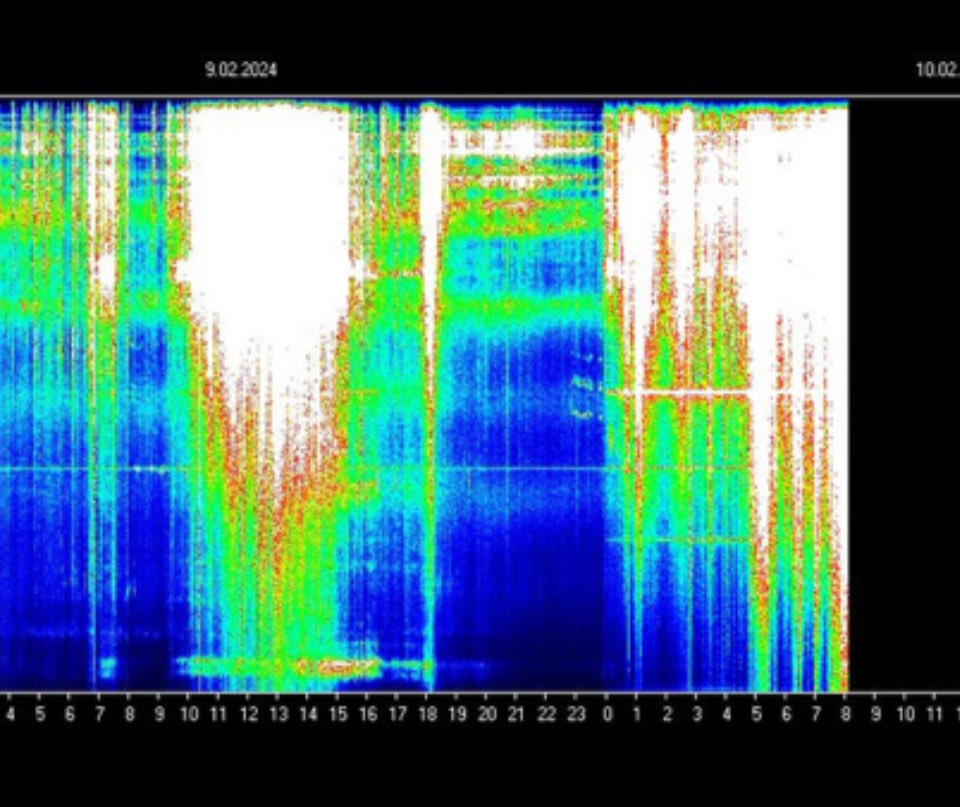
Hi, y’all. Still here although zonked. The Schumann resonance chart was a white-out starting late Friday. Of course, I was woke up…
So I was glad I was able to get out on a walk earlier in the day. The energies started hitting me before I went to bed, too. Yes, I’m just that sensitive.
Anyway, back to the walk. I went to Princess Place Preserve. It was the first longish trip (40 miles RT) after taking my car into the shop for some repairs. I don’t think I’ll buy another Kia after this. Plus, sitting for a long time in an extremely humid, slightly salty environment probably isn’t good for an aged vehicle. Anyway, short story, more repairs are required to keep it going and safe to drive.
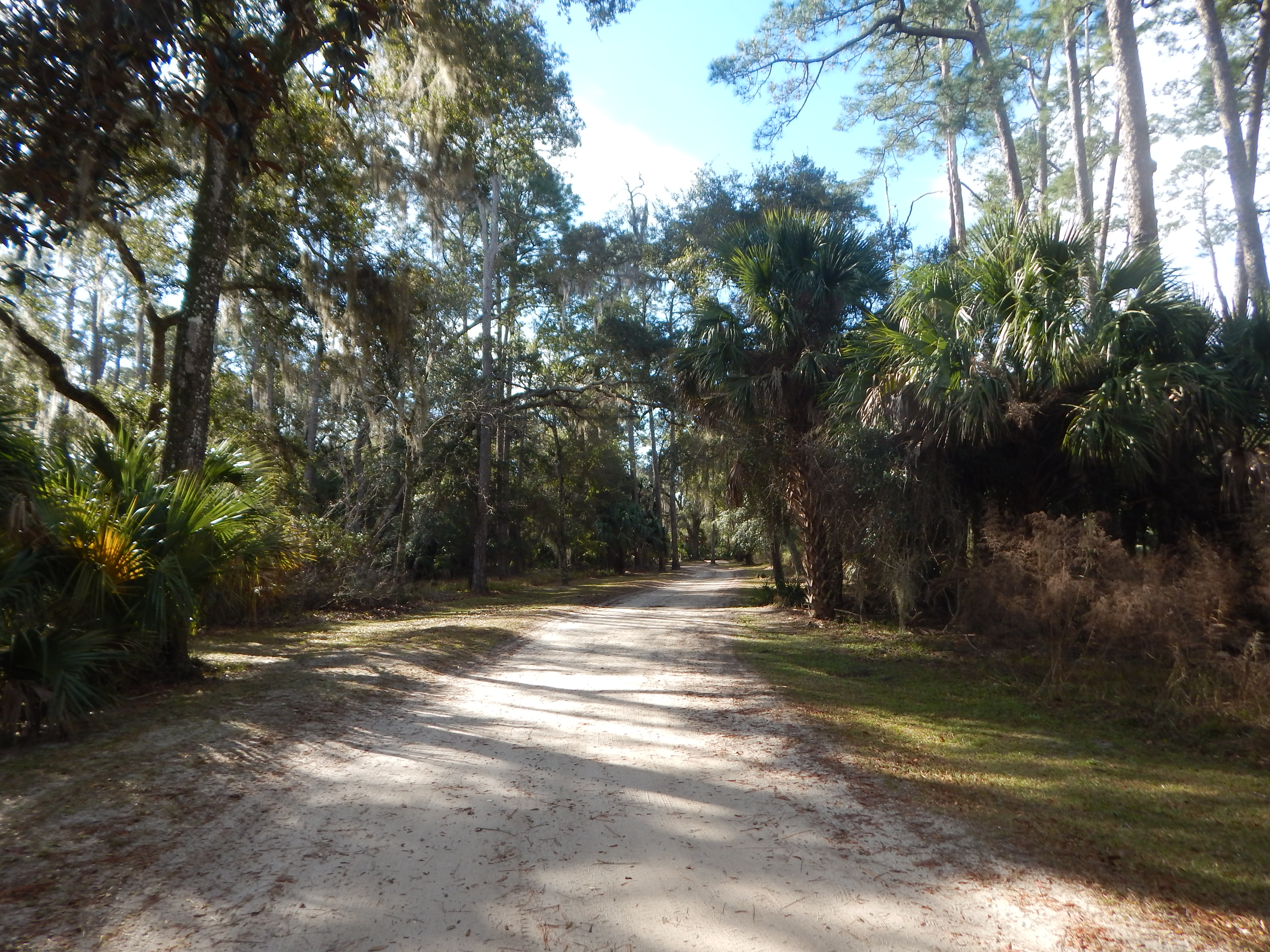
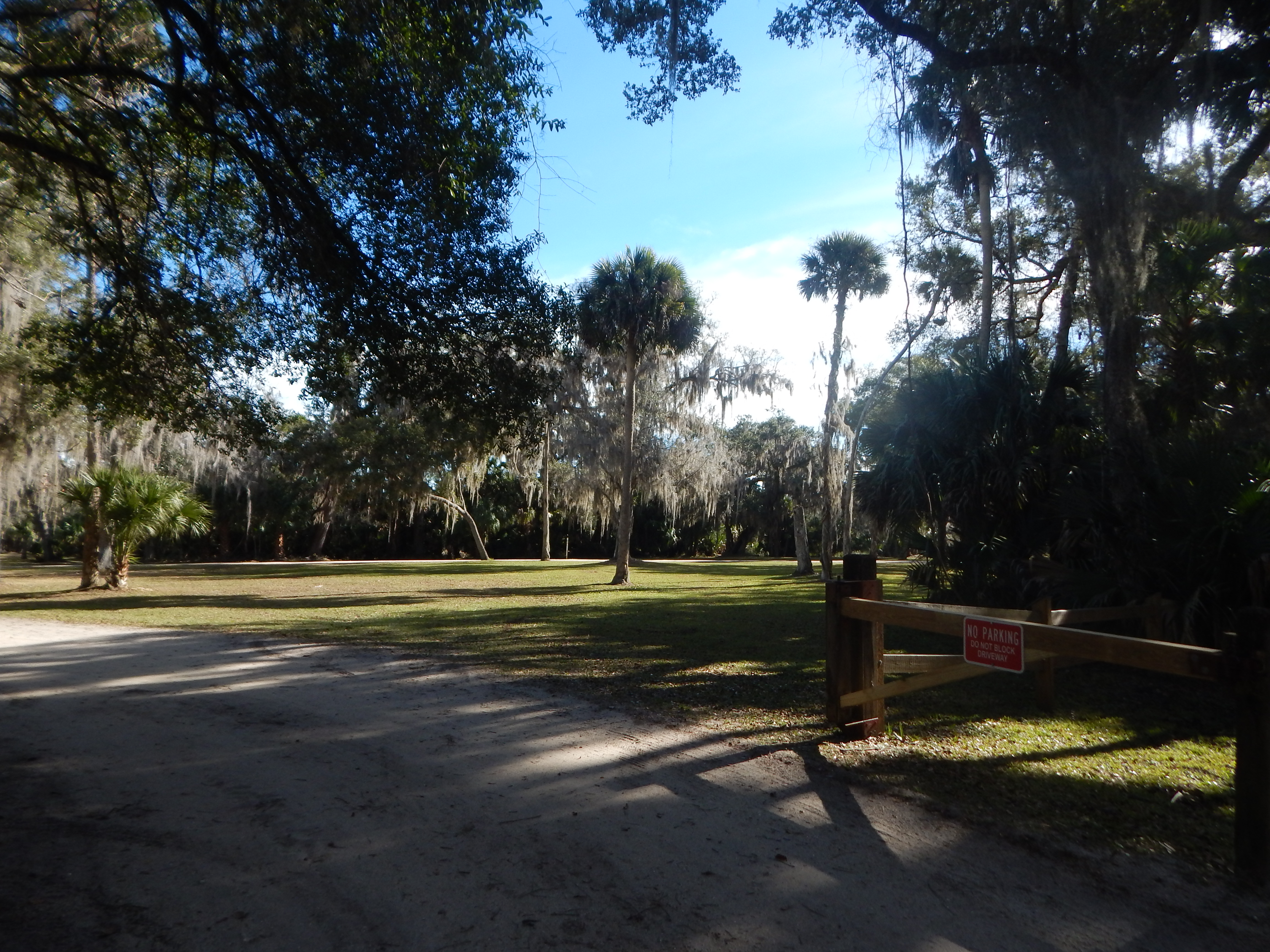
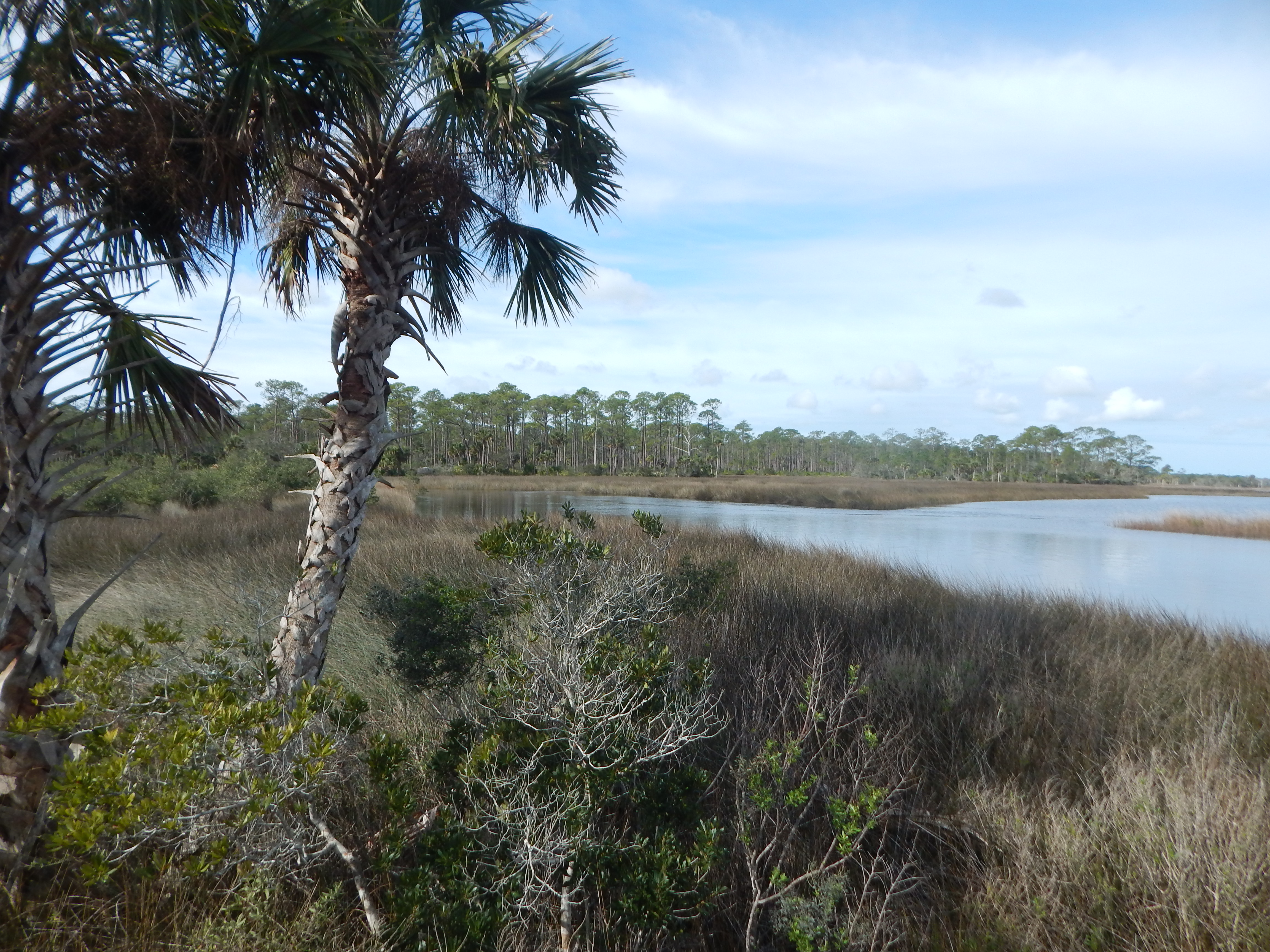
Concerned about the amount of rain we’ve been receiving, I decided to just walk the loop road, a pleasant walk and only two cars (near the end) passed me by. The surface is sandy as you can see from the photo above. The road passes through the forest and then breaks out into a large meadow where an eagle’s nest used to be. Since the signs have been removed, a hurricane must have destroyed the nest. Still, I sighted a couple of ospreys playing (hunting) in the mild thermals. It was in the mid-60’s, warm enough for shirt sleeves (T-shirt).
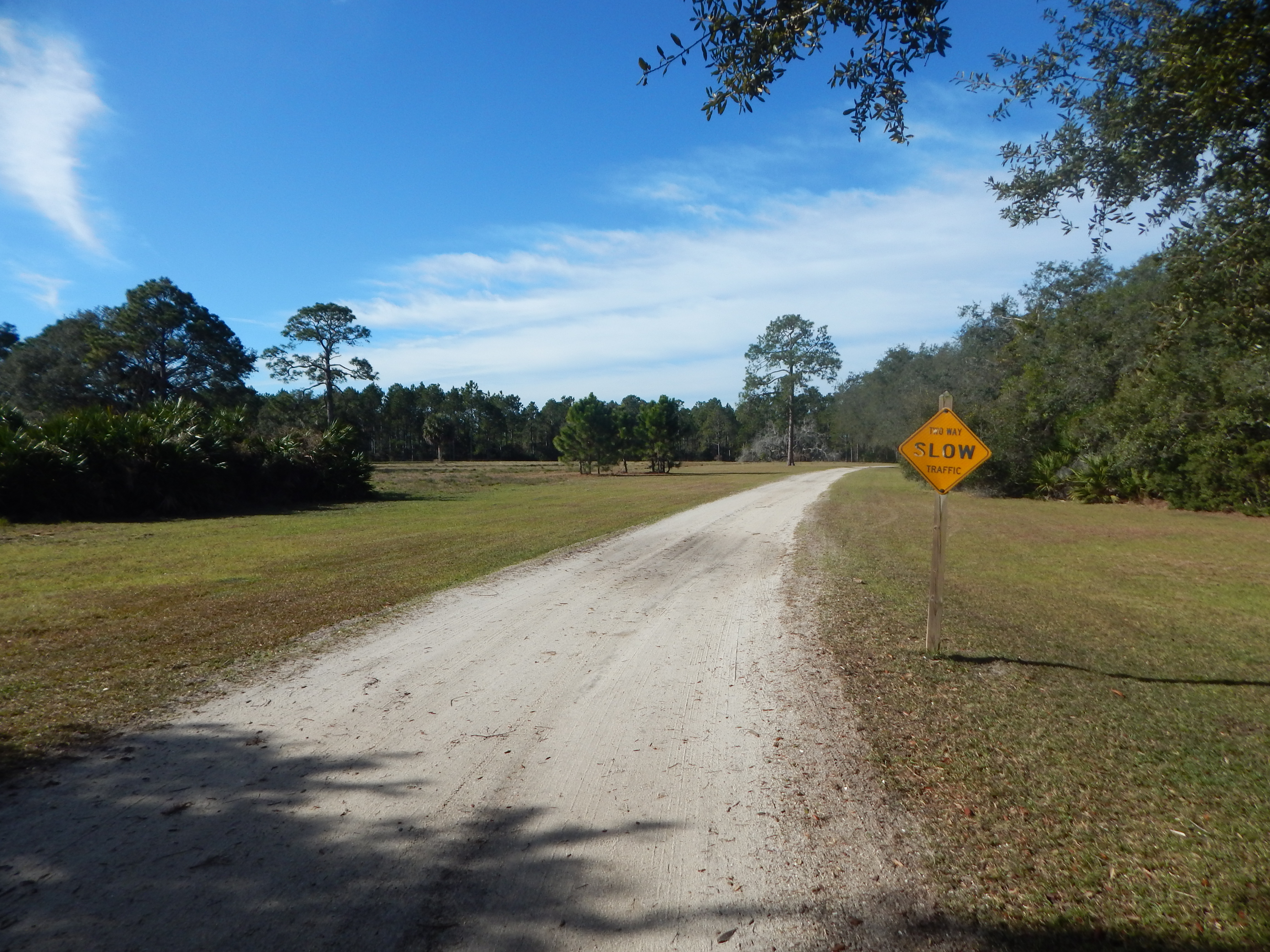
Florida is the type of place where, if you don’t continue mow the grass, you’ll have a jungle sprouting up around you, despite the fact the soil is nearly pure sand, at least on the coastlines. When the surf is up, depending on the wind direction, you can hear the distant drum of the waves from parts of Princess Place.
Being a plant lover, I am curious about the stages of what I think is the Sabal or Cabbage Palm. The older, taller ones don’t retain the spiky appearance on their slender trunks, while the younger versions are short, squat and spiky. Or these are two different palms. Just a matter of curiosity on my part. Decades ago, I took a year of horticulture so I could learn to manage our then large garden. In so doing, I discovered a inborn passion of mine despite the fact I have gone long years without a garden of my own. I can still observe and learn.
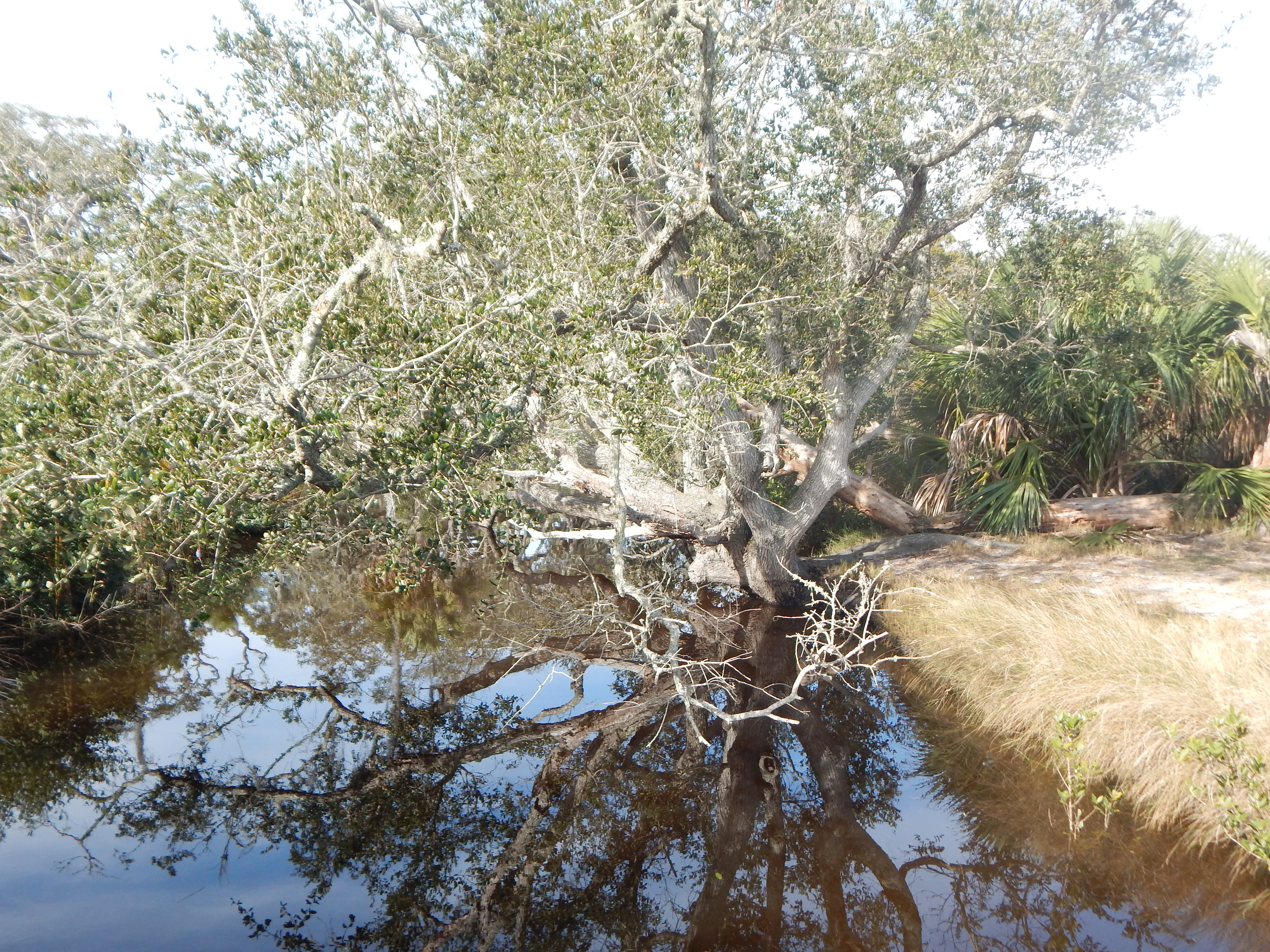
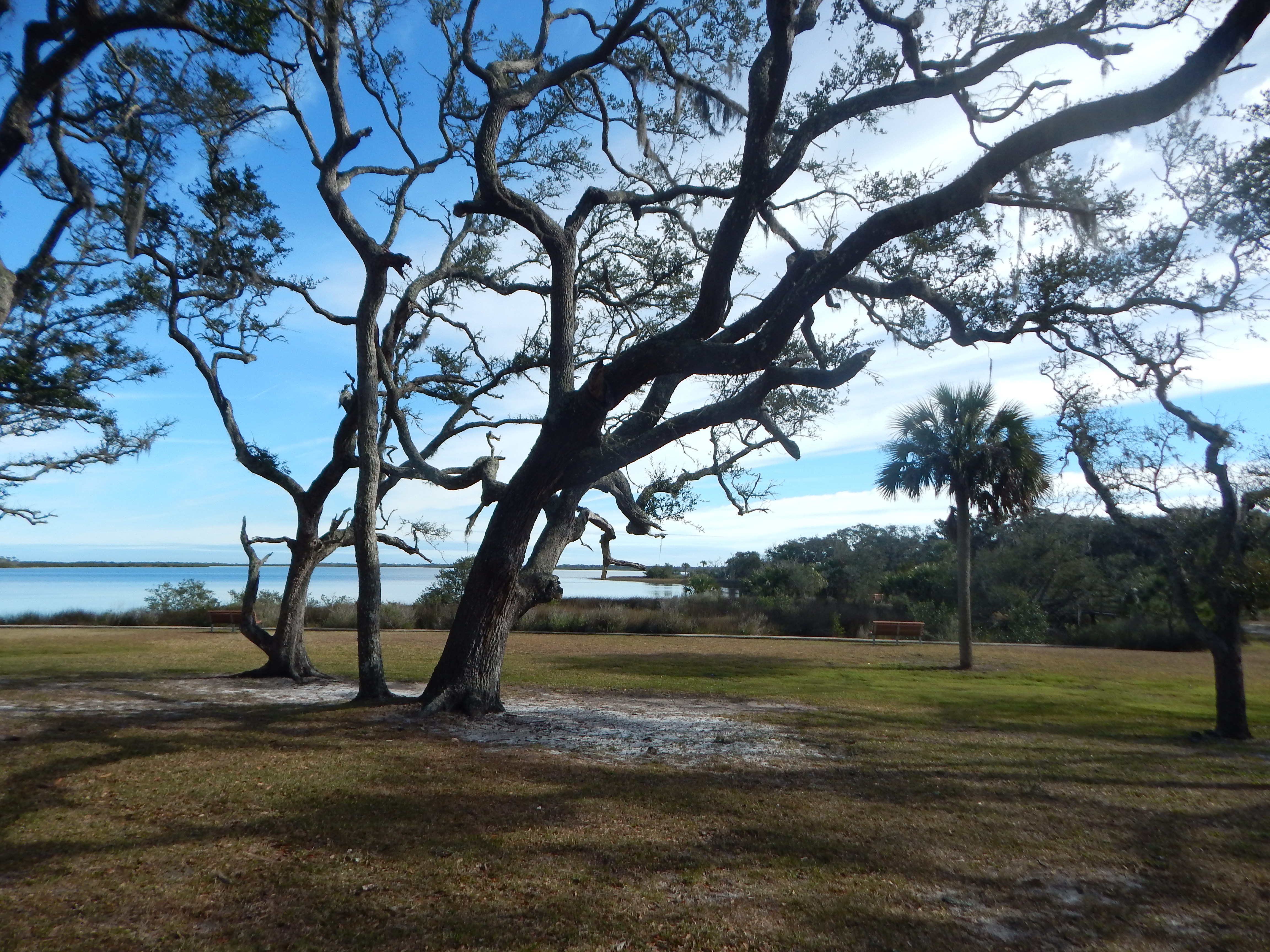
Above is a very old live oak that is barely hanging onto life by clinging to the edge of a sandy island near the lodge. I am in awe of plants like this one who beat the odds despite having endured numerous hurricanes and tropical storms. Could we all hold on despite the emotional storms of our own lives…
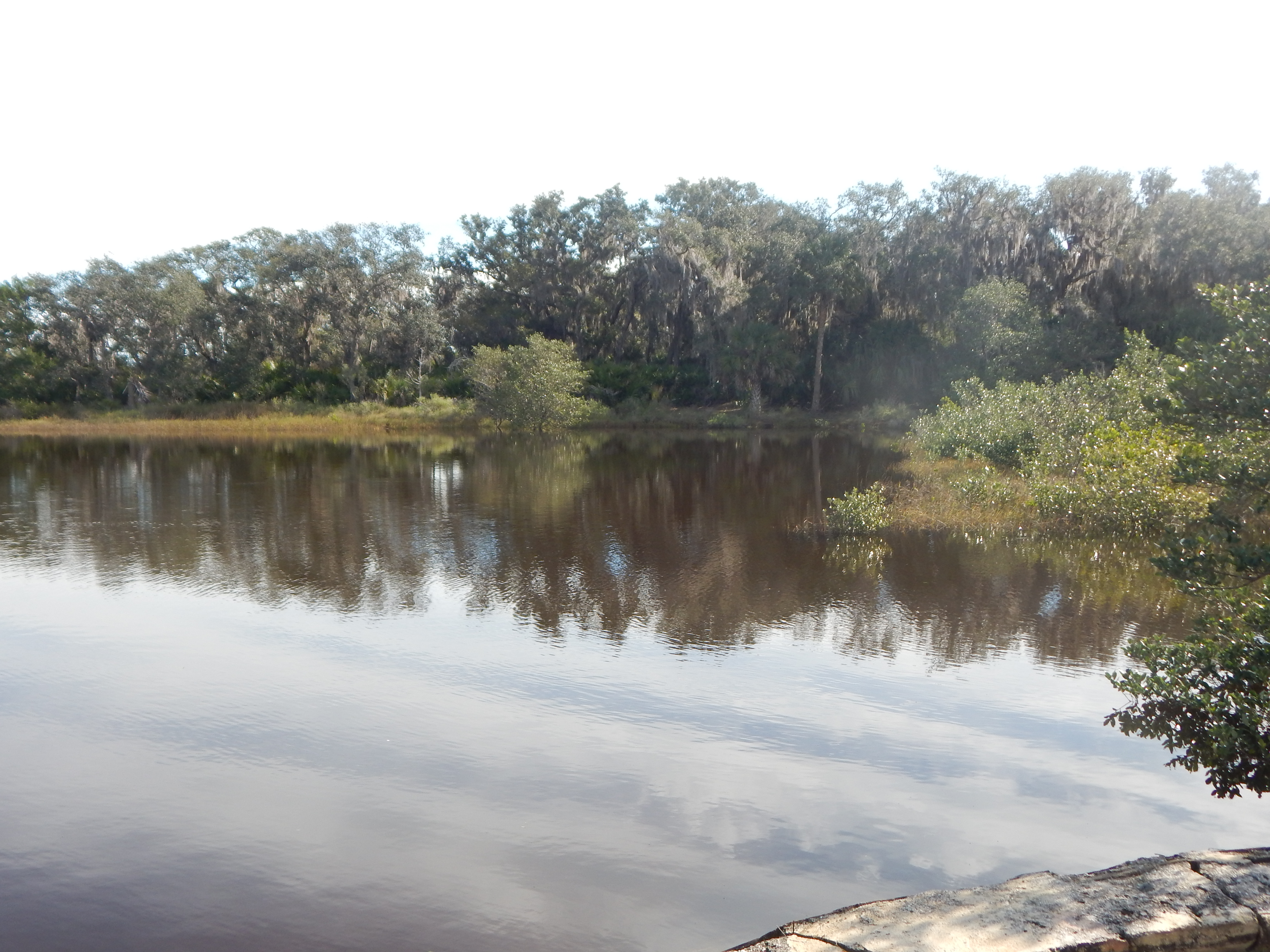
The tide was high and since the big rain last weekend, there has been some coastal flooding. The water was barely a foot from the top of the embankment. I would not have been able to pass some of the wetter areas in the preserve so was well content with my route choice for the day.
There were various visitors to the park. Some school children at the lodge, so I skirted the place. Several cars were parked at the canoe/kayak put-in. I later spotted the kayakers out on Pellicer Creek, probably returning from a trip up the creek.
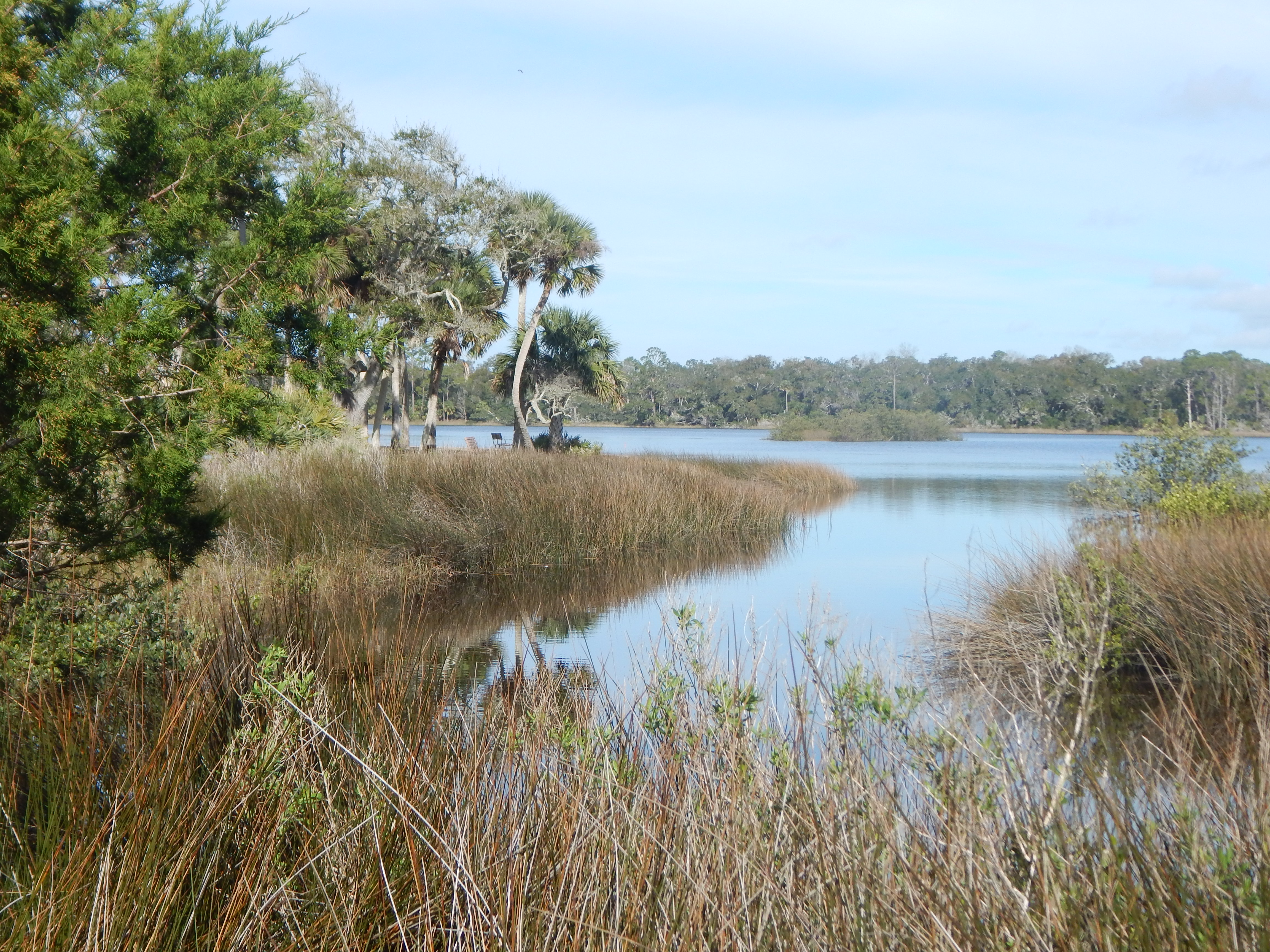
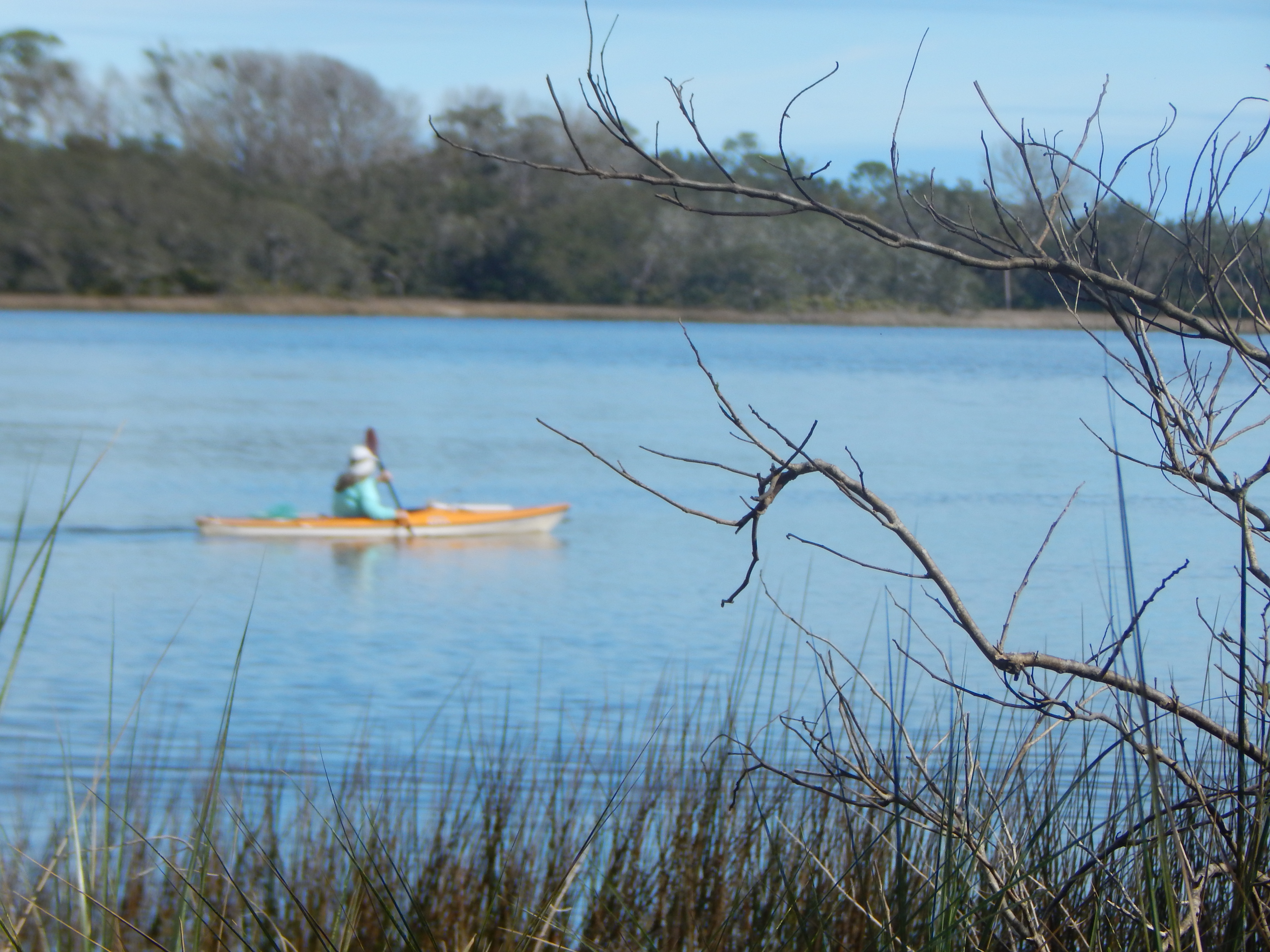
Here’s one kayaker. I think he was out on his own, fishing. There are quite a few fish in brackish Pellicer Creek. While sitting on a bench, I noticed several surfacing perhaps to nibble a tasty newly hatched bug or two. This photo was taken from Creekside Trail, one of my favorites. When the weather is half-way decent, the water is so blue.
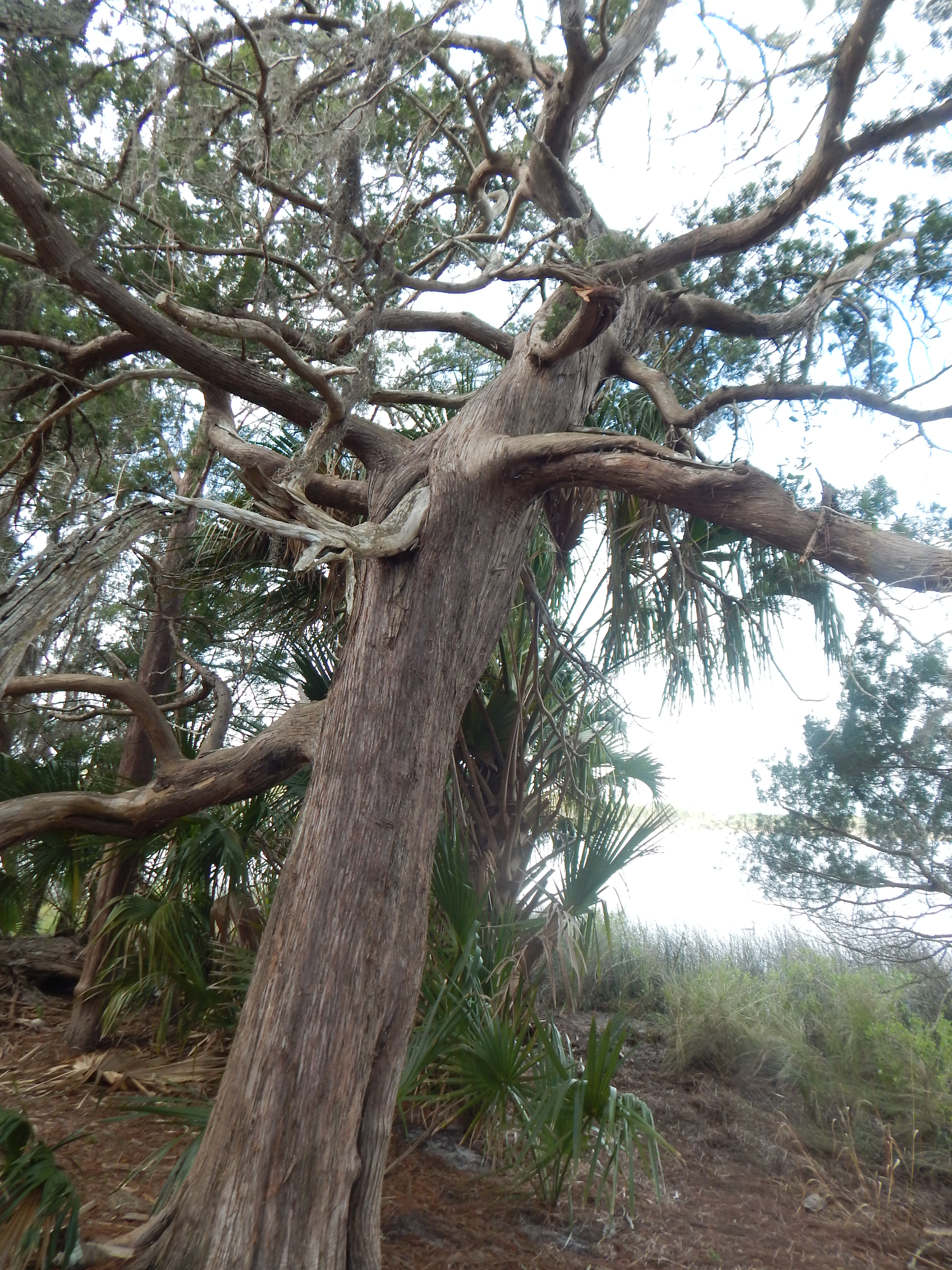
This is a red cedar, another fine example of the rugged quality of these junipers, Juniperus virginiana. No, it’s not from the Cedrus genus. There are only three or four true cedars on the planet and none of them are native to North America (North Africa, Northern India and Lebanon). The rest are called cedars in common usage, while their Latin names are quite different. Still this Eastern Red Cedar is very dignified, tough, resilient plant, growing as it does near salt water. The wood is beautiful, reddish, veined with yellow and fragrant.
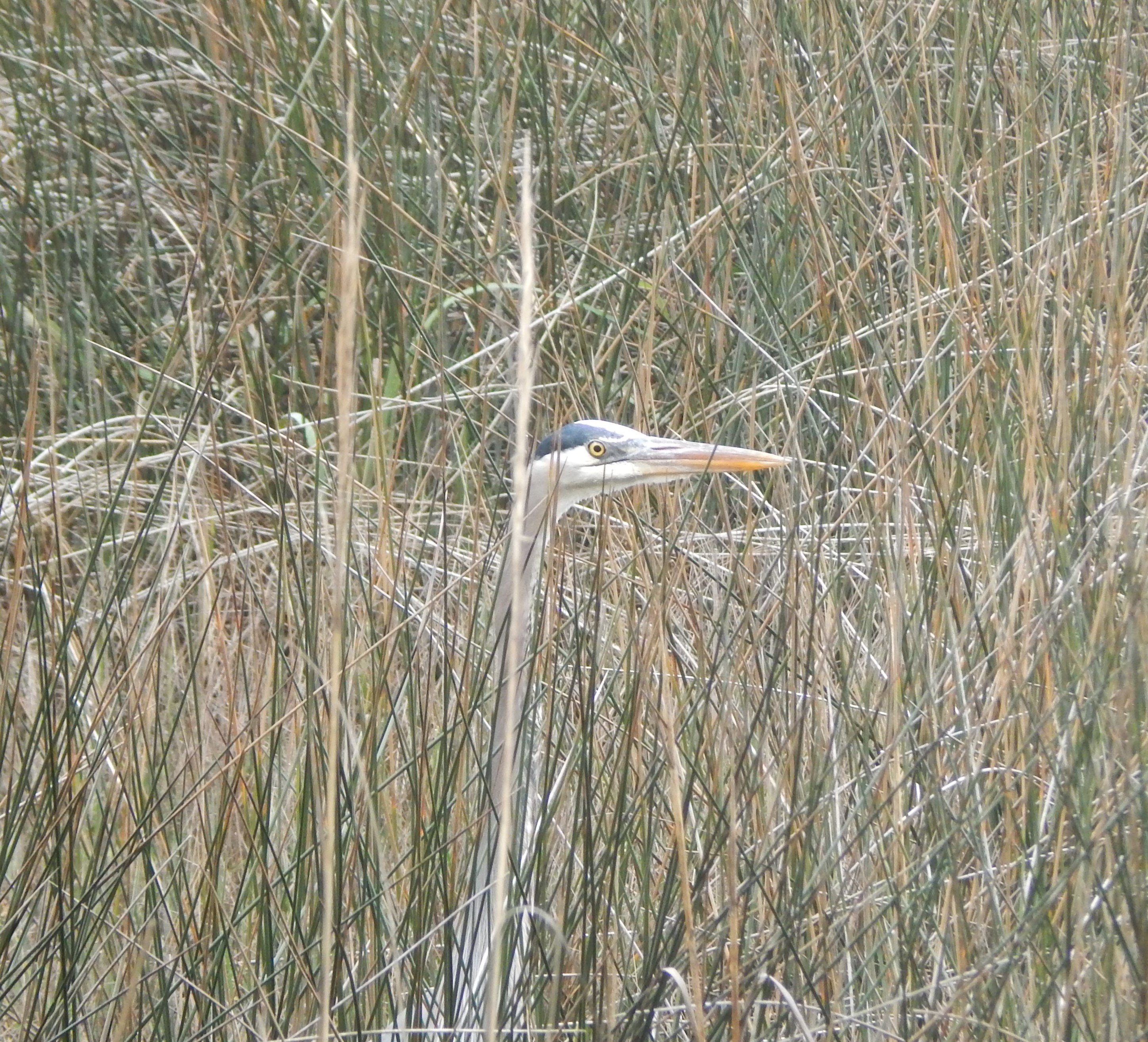
Besides the ospreys overhead, I saw the occasional Great Blue Heron, who with a guttural call and strong slow flap of their majestic wings lift out of the marsh grasses and then land delicately, blending into their surroundings with ease. There was also a merry accompaniment of numerous song birds sounding from unseen perches in the tall trees. Mating season has begun for some of the native species like the mockingbird and cardinal.
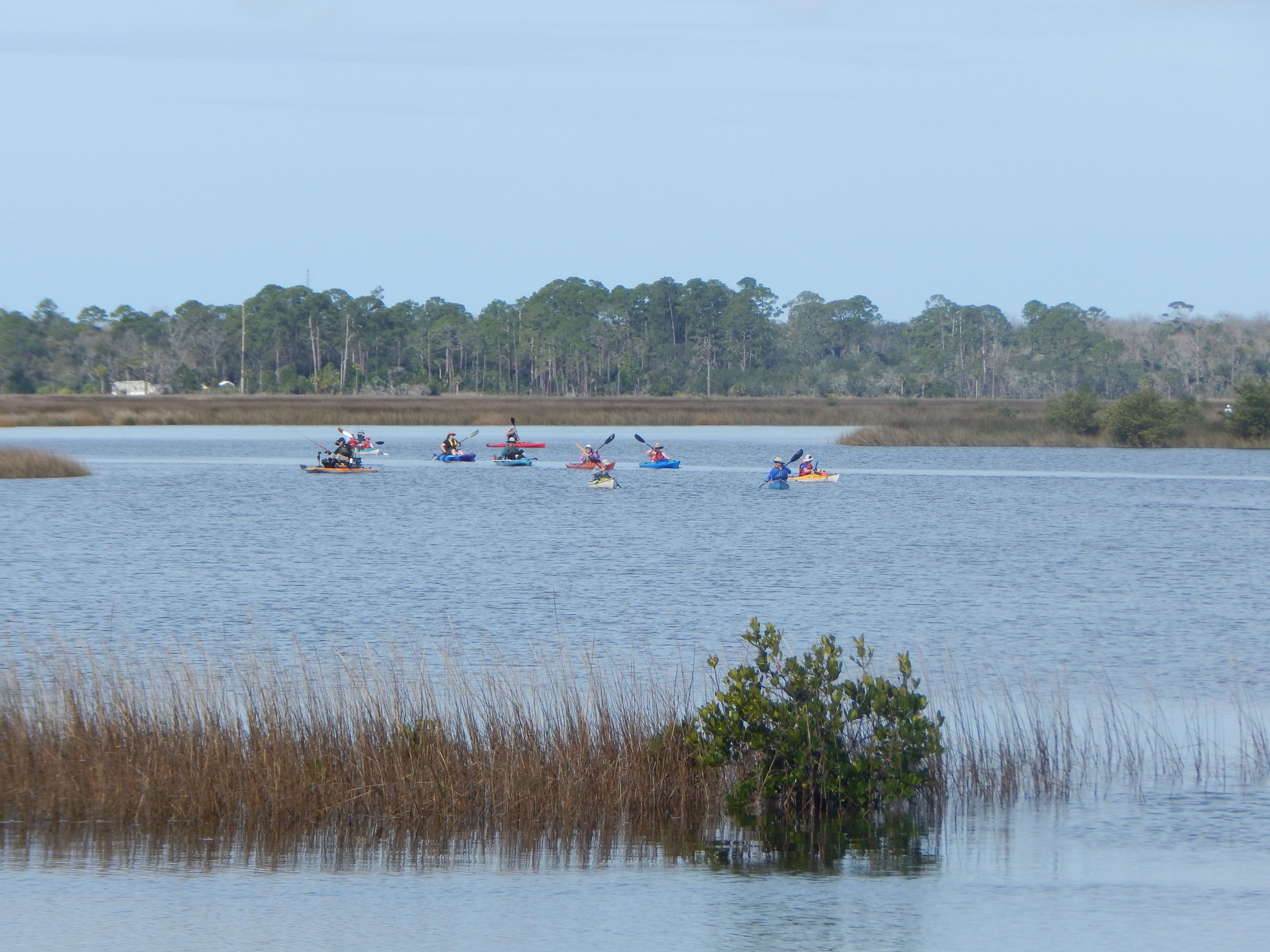
A little later, I spotted the main kayak/canoe flotilla, zigzagging their way across the rippled waters. Colorful crew. They appeared to be accompanied by one motorized vessel, perhaps their guide.
Well, there you have it. I have no idea how far I walked, but my energy level was good. The fatigue hit later, I think, about the time when the energies shifted reflected in the spike of the Schumann resonance (as seen above in the chart). Whatever you think about the SR, it does seem to affect me quite strongly. So, I spent a good part of the night watching and putting up videos.
I would highly recommend the older interview (from December) of Alex Collier with Dr. Northrup. Alex drops some astounding intel on Solar Warden, approximately how big the actual fleet is and a little of what they’re doing now. He also gives some history on how the ICC fleet and the Navy’s Solar Warden were started simultaneously, which I thought was interesting.
These breaks in Nature are what’s keeping me going right now. The battle fatigue is still there, but I endure.
I want to thank all those who commented on my recent announcement to readers post. I really do appreciate your input and kindness. Thank you for supporting Sunny’s Journal.
❤ Eliza Ayres
COMMENTS ON
P.S. Next on the agenda for the weekend, enduring a Super Bowl party in the house. I have opinions about professional sports in general, don’t really like parties and noise. I’ll do my best to be polite and kind… The Super B(owl) half-time “entertainment” has devolved into Satanic rituals of the most blatant sort. I wonder what Ms. Swift has to offer… sorry, folks, I don’t follow singers of any sort. I prefer quiet classical or ethnic music, something melodious and soothing instead of being provocative and overly sexualized.
 Sunny's Journal
Eliza you are magnificent just like your pictures,,, i see you
LikeLike
thanks for the cedar genus info … that was quite helpful,
Currently am repeating an “experiment” ….. placing a jar of water [for healing energies] within the twisted roots of a large cedar tree in a small “forest” of cedars located at the south end of Lake Pend Orielle [north idaho] .
The blue Heron’s neck is perfectly [ nearly so that is] aligned with a dried reed.
nice traveling this route with you today.
n
LikeLike
Oh, I just re-read this comment. I’ve been to that very cedar grove in Idaho. That “cedar” is Thuja plicata, a lovely tree native to the Pacific Northwest, that prefers well watered cool mountain valleys. Some of these trees gain enormous size. I was taking a tour of sorts from Bozeman via Northern Idaho to Seattle. Big trees have always drawn me, their size, presence and wisdom. Thanks for the comment and reminder. I used to live in the PNW before moving to Florida… ~ Eliza
LikeLike
Eliza
Thanks for the reply … including the tech name for our PNW cedars. Thuja plicata.
Have a notion when I/we focus on a single cedar for energy, healing, inner stillness … the other cedars [and maybe all other local forest trees] activate a slight amplification in a kind of collectiveness above the regular baseline that exists.
big smile and warm hug [it’s currently 20 degrees in north idaho]
Noel
LikeLike