
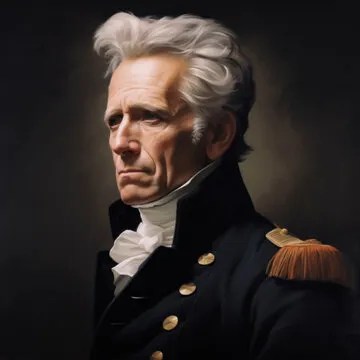
Andrew Jackson destroyed the Second Bank of the United States in 1836, delivering the single greatest blow to financial tyranny in American history. You won’t hear this story told correctly in any economics textbook, because it reveals how central banking works: as a government-sponsored cartel that redistributes wealth from productive citizens to politically connected bankers.
The Second Bank held a 20-year federal charter starting in 1816. It controlled the money supply, issued currency, and held government deposits. Sound familiar? Nicholas Biddle, the bank’s president, wielded more economic power than any elected official. He could trigger financial panics at will by restricting credit. He bought newspapers and bribed congressmen. When Jackson opposed recharter in 1832, Biddle deliberately crashed the economy to punish him.
Jackson called it “a hydra of corruption” and he was right. The bank created artificial booms through credit expansion, then triggered busts when politically convenient. Biddle openly bragged about manipulating markets. Free market economists and Jackson both recognized the core insight: this was legalized counterfeiting with government backing, not free market banking.
The political establishment united against Jackson. Henry Clay, Daniel Webster, and the entire Whig Party defended the bank. Biddle spent millions buying influence. The press attacked Jackson as an economic ignoramus. Every “respectable” voice supported recharter. Jackson stood alone with the American people.
After Jackson killed the bank, the country experienced the strongest economic growth in its history. From 1837 to 1862, America operated without a central bank. Industry flourished. Wages rose. Innovation exploded. This wasn’t coincidence. When you stop subsidizing financial speculation and let productive capital find its natural home, prosperity follows.
Central banks don’t stabilize economies: they destabilize them for private gain.
7:51 AM · Jun 6, 2026
By Nick Giambruno, International Man
An old piece of mine, re; Andrew Jackson and the 2nd Central Bank of the US, and an excerpt from my books.
It’s hard to believe the United States government was ever debt-free.
But it happened once—in 1835—thanks to President Andrew Jackson. He was the first and only president to pay off the national debt completely.
One biographer says the former president viewed debt as a “moral failing,” a sort of “black magic.”
When he became president, Jackson was determined to rid the US of its national debt. After all, debt enslaves you to your creditors.
Jackson knew that being debt-free was essential to independence. This outlook resonated with many Americans back then.
With that in mind, Jackson attacked the institutions and powerful people who promoted and enabled the federal debt. This included the banking elites and the Second Bank of the United States, the country’s central bank at the time and precursor to today’s insidious Federal Reserve system.
While campaigning against the evils of national debt and central banking, Jackson miraculously survived an assassination attempt when an assassin’s two pistols both misfired. Shadowy interests tied to the central bank were almost certainly behind the effort.
However, Jackson survived and went on to “End the Fed” of his days. He successfully bested the central bank—and the powerful interests behind it—and shut down the Second Bank of the United States.
He also repaid the federal debt in full, which was no easy task.
Jackson couldn’t squeeze the American people with a federal income tax to repay the debt. It didn’t exist at the time and would have been unconstitutional.
He also couldn’t simply print currency to pay off the debt. Perpetuating such an insane fraud—which the Fed does on a massive scale today—likely never entered his mind.
Instead, Jackson had to rely on tax revenue from other sources, mainly import tariffs and excise taxes, to pay down the debt. He also drastically cut federal spending and frequently vetoed spending bills.
Jackson’s determination worked. By January 1835, the US was debt-free for the first time.
Unfortunately, it didn’t last much more than a year. After that, the US would never again be debt-free—not even close.
Revenge of the Central Bankers
After Jackson succeeded in ending the Second Bank of the United States, anything associated with a central bank became deeply unpopular with the American public. So, central bank advocates tried a new branding strategy.
Rather than call their new central bank the “Third Bank of the United States,” they went for a vague and boring name. They called it “the Federal Reserve” and managed to hide it from the average person in plain sight. As a result, over 100 years since its founding, most Americans have no idea what the Federal Reserve is or what it actually does.
Ironically, Jackson’s face has been on the $20 “Federal Reserve Note” since 1928. So in a sense, this symbolic move is central banking advocates giving the middle finger to one of their most steadfast opponents.
After all, the Fed is really the “Third Bank of the United States.” No doubt, Jackson would have been disturbed at having his face on its fake confetti money.
In any case, most Americans today have no idea who Jackson is, what he did, or why he did it.
To the extent he is ever mentioned, the media, academia, and the rest of the establishment unjustly besmirch him as—you guessed it—a “racist.”
Note to Readers:
Trump is taking down the Third Bank of the United States, the Federal Reserve. It isn’t “federal”, a bank, or American. It is/was a privately owned bank that has ripped off American taxpayers for decades, causing artificial economic ups and downs. The Fed is being replaced by a decentralized financial system. Study QFS to learn more.
Eliza
 Sunny's Journal