
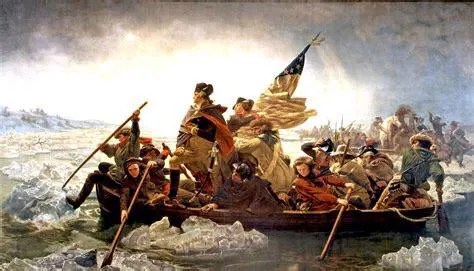
1776 was more than a rebellion against a king.
It was a declaration that the American people would no longer live under the authority of a distant crown, but under the sovereignty of God and the natural rights endowed to them by their Creator.
The Declaration of Independence did not grant rights, it acknowledged rights that already existed. It placed the source of authority above governments, above monarchs and above institutions.
But what if that independence did not remain intact?
What if the real battle was not lost on a battlefield, but through legal and financial mechanisms few people ever noticed?
In 1871, Congress passed an act incorporating the District of Columbia. Most people have never heard of it. Yet for generations, researchers have argued that this seemingly administrative change marked the beginning of a quiet transformation, one that shifted power away from the constitutional republic envisioned by the Founders and toward a corporate style system of governance tied to international banking interests and Admiralty principles.
The incorporation of Washington D.C. was not merely an administrative reorganization, it represented the creation of a separate corporate entity operating alongside, and eventually above, the constitutional republic itself.
The United States gradually ceased functioning as a sovereign nation of free citizens and began operating more like a corporation whose primary purpose was debt management, taxation and administrative control.
The distinction may sound abstract, but its implications are profound.
Americans were quietly transformed from sovereign individuals into legal entities, represented by the all caps name that appears on government documents, birth certificates, tax records and court filings.
The flesh and blood man or woman became secondary to a legal fiction. The citizen became collateral, the nation became an asset and government became a management system.
From that moment on we have seen the growing dominance of commercial codes, banking interests, debt based currency, and the expansion of administrative agencies that increasingly govern through regulations rather than constitutional limitations.
What emerged was not constitutional law in the original sense, but a system rooted in commercial relationships, contracts, obligations and jurisdictional structures under maritime and admiralty law. (British Crown)
The America of today bears little resemblance to the vision expressed in 1776.
A government founded upon individual sovereignty now monitors, taxes, licenses, permits, regulates and tracks almost every aspect of life.
A nation born in rebellion against centralized authority now possesses one of the largest bureaucratic structures in human history.
The question is not whether something changed, the question is when. The events of 1871, marked the moment America ceased to think of itself as a republic and began to operate as a corporation.
The struggle we are witnessing today is not simply political, it is a struggle over jurisdiction, sovereignty and the restoration of the original relationship between the individual, government and God.
The battle for independence did not end in 1776, but maybe it will end now…
https://t.me/LauraAbolichannel
2026 – The Completion of the Counter-Revolution – The Restoration of American Sovereignty
What if UFC Freedom 250 is not merely a sporting event, but yet another symbolic ceremony in the restoration of American sovereignty?
If the Act of 1871 marked the beginning of America’s transformation from a constitutional republic into a corporate entity operating within a commercial and maritime legal framework, then reversing that process would require more than legislation and executive orders.
It would require a public restoration; a visible sequence of events marking America’s return to the principles upon which it was founded in 1776.
And that process began on June 14, 2025, Flag Day. Not just any date, but the anniversary of the adoption of the American flag in 1777, the enduring symbol of the Republic and the law of the land.
The next major step came on April 18, 2026, when President Trump publicly read from 2 Chronicles, calling the nation back to God. This represented far more than a religious message, it was a public appeal to return to the original source of authority established in 1776.
Nine days later came the visit of King Charles and Queen Camilla.
This is where things become particularly interesting. If 1776 represented America’s separation from the British Crown, then the King’s presence during a supposed restoration process carries obvious symbolic significance. Even more curious was the revival of the ancient tradition known as “telling the bees.”
For centuries, bees were informed when a monarch died, when ownership changed hands, or when authority was transferred from one custodian to another. The ritual traditionally marked the end of one era and the beginning of another. It now marked the symbolic return of authority from the Crown back to the American people.
On May 17th came the National Prayer of Dedication, exactly one lunar cycle after Trump’s call for the nation to return to God. This represented the public rededication of the nation and the reaffirmation of the original covenant.
Then came the changing of the guard at the Federal Reserve.
On May 25th, Kevin Warsh was sworn in as Chairman of the Federal Reserve, the institution that represents the central pillar of the debt based financial system that emerged from the post 1871 order.
These events are steps in a carefully sequenced process.
Which brings us to June 14, 2026, exactly one year after Flag Day, a UFC event is scheduled to take place on the South Lawn of the White House.
At first glance it appears completely unrelated to everything that came before it. But what if it is not?
What if UFC Freedom 250 serves as a public symbolic ceremony marking the people’s participation in, and acceptance of, the restoration process itself?
Major transitions require more than declarations from leaders and symbolic gestures from institutions. They require the visible participation of the people themselves.
Throughout history, public ceremonies have served as a means of expressing collective consent. Coronations, public oaths, parades, celebrations and national spectacles have all been used to mark the acceptance of a new order, a new ruler or a new chapter in a nation’s history.
The UFC Freedom 250 is more than entertainment; it’s a highly visible public spectacle taking place on sovereign American soil, on Flag Day, exactly one year after the alleged restoration process began and only weeks before the 250th anniversary of the Declaration of Independence.
An estimated one billion people will be watching, emotionally investing themselves in the spectacle.
The foreign champions and contenders represent the established international order, while the American fighter competing on sovereign American soil represents the ‘we the people’ reclaiming their own ground.
The event functions as a visible demonstration that the American people embrace a return to the principles of 1776 and the sovereignty that was lost after 1871.
The fight itself is not the point, the point is the ceremony, the point is the people’s participation.
UFC Freedom 250 may represent yet another step in a process that began a year earlier and culminates on July 4th, 2026, exactly 250 years after America declared its independence from the British Crown and placed itself under the sovereignty of God.
The battle for independence did not end in 1776, it has taken two and a half centuries to complete.
https://t.me/LauraAbolichannel
Related:
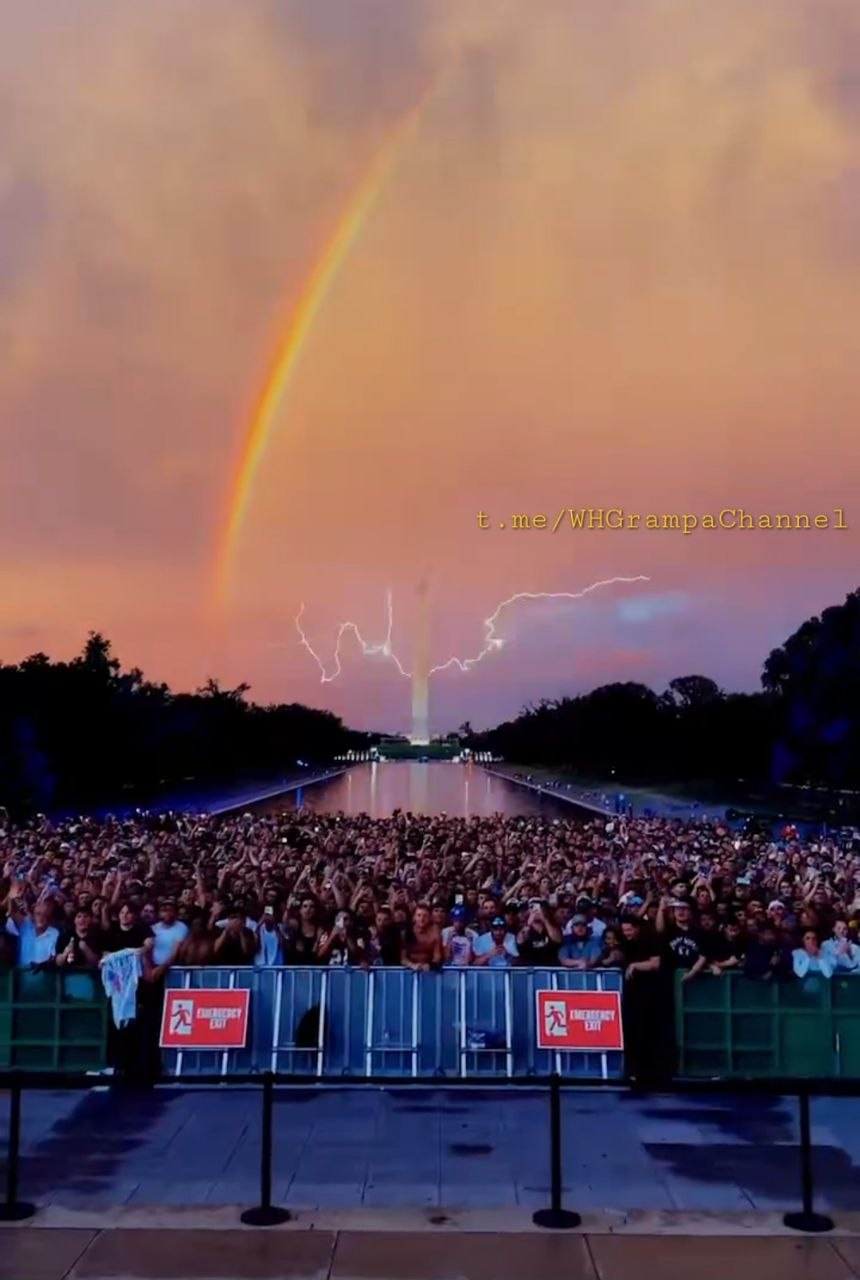
Everything happening publicly tomorrow … June 14 2026 … UFC FREEDOM 250 … represents the symbolic end of our former Maritime Law system under Satanic Occult rule … and the beginning of our Republic under The New American Order and the Law of the Land.
You will witness We the People acquiesce .. en mass .. on the south lawn of the WH during the main event … give the required “symbolic and lawful” consent required to both end the Beast System and give rise to the New American Order ….
The Storm .. that President Trump spoke about after his 2017 inauguration .. in front of the generals .. will follow for all to witness …
Notes to Readers:
Corporate governance will give way to decentralized governance and to start that process, we undergo The Storm of arrests that must take place.
Again, I recommend going to the War Correspondent’s Telegram channel. He is presenting three to four of his intel drops per day. I would prefer not to overload people’s email boxes with this when y’all can take the time to link and read the material yourself.
https://t.me/warcorrespondent107
Everything that Trump is doing today is guaranteeing that our national and person sovereignty is being restored. There are a few steps remaining… Military martial law, the Scare Event… the failure of the stock market, the Reveal.
Breathe. It’s not long now. Even though the pressure is unbearable, hang on.
The best is yet to come.
Eliza Ayres, Sunny’s Journal, https://sunnysjournal.com
 Sunny's Journal